GNSS / GPS Receivers
Lantronix A5100-A GPS/GLONASS GNSS Receiver Modules
The A5100-A is a surface-mount GNSS receiver module built on Qualcomm SiRFstar V that tracks GPS and GLONASS concurrently, for designers embedding positioning into trackers, telematics units and other battery-powered devices.
From $14.53
Overview
About the Lantronix A5100-A
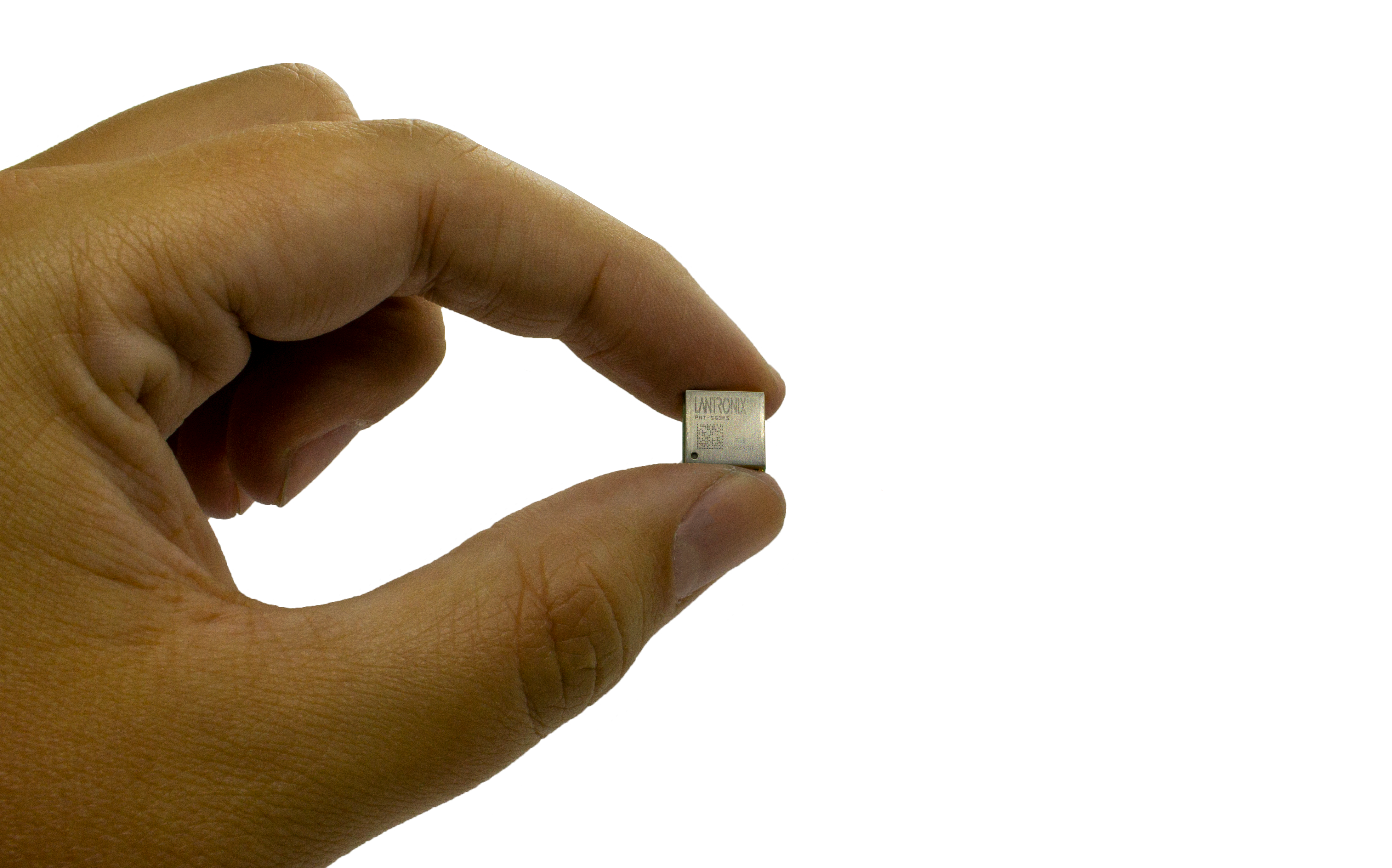
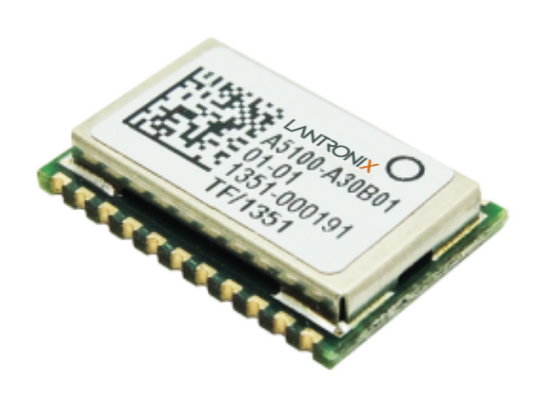
Lantronix lists the A5100-A as NRFND (not recommended for new designs) and has published a product discontinuation notice; no successor is named on the product page. The module (also written A5100A) integrates Qualcomm SiRFstar V into a 15 x 10.2 x 2.5 mm SMT package and computes position from simultaneous GPS, GLONASS, QZSS and SBAS measurements. GPS plus BeiDou or GLONASS plus BeiDou can also be configured, and the receiver is pin-to-pin compatible with the earlier Lantronix A2200-A.
The 52-channel L1 receiver tracks down to -165 dBm on GPS, navigates to -160 dBm and acquires from a cold start at -147 dBm. Horizontal accuracy is under 2.5 m CEP autonomous and under 2.0 m with SBAS, with hot, warm and cold TTFF of under 1 s, 30 s and 35 s. Jammer remover technology detects and removes up to 8 in-band jammers, and SiRFInstantFix extended ephemeris supports A-GPS.
Supply is 3.0 to 3.6 VDC, drawing 31 mA while tracking, 300 µA in SiRFaware micro power mode and 180 µA in hibernate. NMEA or SiRF OSP binary output runs over UART at 1 or 5 Hz, an I2C MEMS interface accepts sensor data, and the module operates from -40°C to +85°C.
Key capabilities
- Concurrent GPS and GLONASS
- Simultaneous GPS, GLONASS, QZSS and SBAS measurements improve availability and accuracy in urban canyons compared with single-constellation tracking.
- Drop-in for A2200-A designs
- Pin-to-pin compatible with the Lantronix A2200-A, with power, ground and dedicated pins in the same locations, so existing layouts can carry over.
- Low-power standby modes
- SiRFaware micro power mode draws 300 µA and keeps the receiver ready for a hot start; hibernate draws 180 µA.
- Jammer removal
- Detects and removes up to 8 in-band jammers with minimal loss of sensitivity, helping in electrically noisy host devices.
- Sensor-assisted navigation
- An I2C MEMS interface lets the receiver take in additional sensor information from the host design for improved navigation when satellite signals are weak.
How to choose the right A5100-A part number
Two receivers are listed. A5100A is the base SiRFstarV 52-channel SMT receiver module. A5135H is the same receiver class with a built-in patch antenna, for designs that want to avoid routing to a separate antenna. Both specify -147 dBm acquisition and -160 dBm navigation sensitivity and include the I2C MEMS interface. Because the A5100-A is NRFND, check the discontinuation notice before committing a new design.
Configure & order
Find your A5100-A part number
Every orderable A5100-A configuration, filtered by the specs that actually differ between them. Pick what you need on the left and the matching part numbers appear here.
A5100A
$14.53
Ships on backorder
A5135H
$19.80
Ships on backorder
Where the A5100-A is used
- Vehicle and asset trackers needing concurrent GPS and GLONASS
- Upgrading existing A2200-A boards without a layout change
- Battery-powered devices using SiRFaware hot-start standby
- Embedded positioning in urban canyon environments
A5100-A FAQ
Is the Lantronix A5100-A still available for new designs?
Lantronix marks the A5100-A as NRFND, not recommended for new designs, and has published a product discontinuation notice. It remains listed for existing designs; review the notice for last-order details before planning production.
What is the difference between the A5100A and A5135H?
Both are SiRFstarV-based 52-channel GNSS receivers with -147 dBm acquisition sensitivity, -160 dBm navigation sensitivity and an I2C MEMS interface. The A5135H adds a built-in patch antenna.
Is the A5100-A compatible with the A2200-A footprint?
Yes. Lantronix states the A5100-A is pin-to-pin compatible with the A2200-A, with power, ground and dedicated pins in the same locations, so it can adapt to an existing A2200-A design.
How much power does the A5100-A receiver consume?
It runs from 3.0 to 3.6 VDC. Typical draw is 37 mA average while searching with 40 mA peak, 31 mA while tracking, 300 µA in SiRFaware micro power mode and 180 µA in hibernate.
Which output protocols does the A5100-A support?
NMEA is the default over UART at 9600 baud, with GGA, RMC, GSA, GSV, VTG, GLL and ZDA messages. SiRF binary and Open Socket Protocol run at 1,200 to 115.2k baud. Update rate is 1 Hz or 5 Hz.