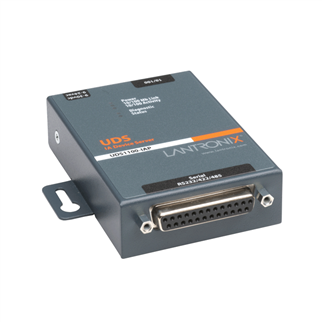
Serial-to-Ethernet Device Servers
Lantronix UDS1100 / UDS1100-PoE Single-Port Serial Device Servers
The UDS1100 is a compact single-port external device server that puts one RS-232, RS-422 or RS-485 device on a 10/100 Ethernet network, with a PoE-powered version for locations without a power outlet.
From $175.40
Overview
About the Lantronix UDS1100 / UDS1100-PoE
The UDS1100 (also written UDS 1100) connects equipment that only has a serial port, such as utility meters or fire and alarm panels, to an Ethernet network so it can be monitored and controlled remotely. It works by serial tunneling: serial data is packetized and carried over TCP/IP, so neither the attached device nor its software needs to change. Two UDS1100 units can also be paired to extend a serial link across a building or a WAN.
The serial port is software-selectable RS-232, RS-422 or RS-485 (2- and 4-wire) on a DB25F DCE connector, from 300 to 230 Kbaud, with RTS/CTS or XON/XOFF flow control. The network side is 10Base-T/100Base-TX on RJ45. The included Com Port Redirector with TruPort technology lets Windows applications open the remote port as a local COM port, including control of hardware pins. Modem emulation mode accepts AT commands, replacing dial-up modems and phone lines. The UDS1100 is UL 864 listed, so fire and alarm manufacturers can add networking to UL 864 products without reapplying to UL.
The metal enclosure measures 9.0 x 6.4 x 2.3 cm, weighs 0.20 kg and has integrated wall mounts, with an optional 35 mm DIN-rail kit. It operates from 0 to 60 C and is configured by web browser, Telnet, the serial port or Lantronix DeviceInstaller, which assigns IP addresses and upgrades firmware. For embedding the same function inside equipment, Lantronix offers a board-level version, the UDS1100-B.
Key capabilities
- RS-232, RS-422, RS-485
- One software-selectable serial port supports RS-232, RS-422 and 2- or 4-wire RS-485 at 300 baud to 230 Kbaud, so one model covers most legacy equipment.
- Virtual COM ports
- Com Port Redirector with TruPort technology maps the remote serial port to a local Windows COM port, including control of hardware pins and serial buffers.
- UL 864 listed
- The UL 864 listing lets fire and alarm panel manufacturers add Ethernet to their UL 864-listed products without reapplying to UL.
- PoE or local power
- The standard UDS1100 runs on 9-30 VDC or 9-24 VAC at 1.5W maximum; the UDS1100-PoE draws power from an 802.3af source over the Ethernet cable.
- Dial-up modem replacement
- Modem emulation mode accepts AT commands on the serial port and opens a network connection instead, eliminating dedicated modems and phone lines.
- Hardened I/O protection
- 15 kV ESD protection on the serial transceivers, 1500 VAC Ethernet isolation and 600 W transient protection on the power input.
How to choose the right UDS1100 / UDS1100-PoE part number
The three UDS1100 part numbers differ only in how the unit is powered. UD1100001-01 ships with a US 120 VAC power supply. UD1100002-01 ships with a 100-240 VAC international supply and regional adapters. UD11000P0-01 is the UDS1100-PoE, powered from an 802.3af PoE switch or injector with no local supply. Add ACDIN2001-01 for DIN-rail mounting, ACC-500-163-R for a DB25M to DB9F serial cable, or ACC-500-171-R to break the DB25 out to RS-485 and 9-30 VDC screw terminals.
Configure & order
Find your UDS1100 / UDS1100-PoE part number
Every orderable UDS1100 / UDS1100-PoE configuration, filtered by the specs that actually differ between them. Pick what you need on the left and the matching part numbers appear here.


Complete the deployment
Accessories, renewals & add-ons
Everything sold for the UDS1100 / UDS1100-PoE, organized by what it does — cables & adapters, other add-ons— each with why you'd add it.
Cables & adapters
2 items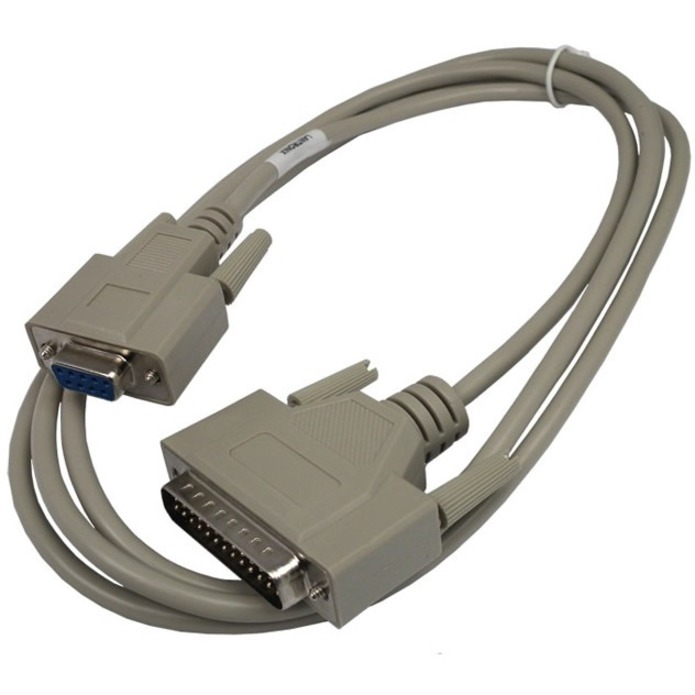
cable
ACC-500-163-R
6 ft DB25M to DB9F serial cable for compatible Lantronix device server products.
$21.72
Ships on backorder

power input screw terminal adapter
ACC-500-171-R
DB25M to RS-485 screw terminal adapter with 9-30 VDC power input. It is listed as a compatible accessory for select Lantronix device servers.
$96.63
2 in stock
Other add-ons
1 item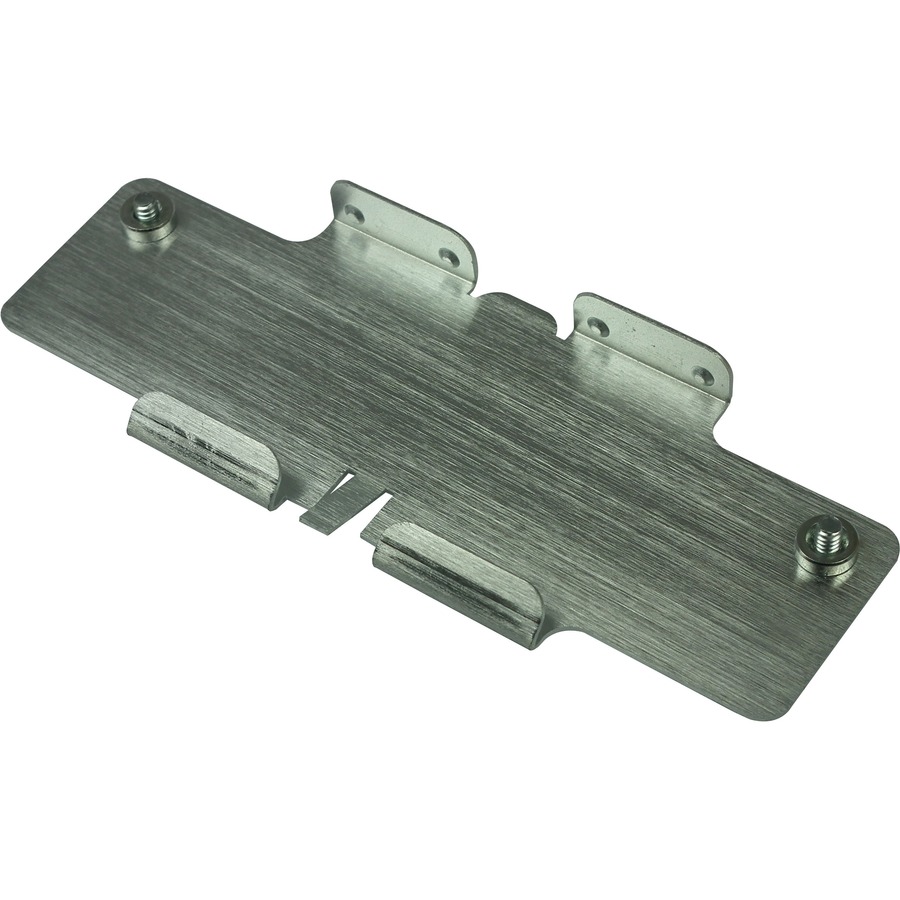
Optional DIN-rail mount
ACDIN2001-01
Optional DIN-rail mount kit for compatible Lantronix device servers, including UDS200, SDS2100, and WiBox references in the part description.
$25.05
Ships on backorder
Compatibility taken from the Lantronix part-number tables for the UDS1100 / UDS1100-PoE. Don't see what you need? Request a quote — we can source the full Lantronix catalog.
Where the UDS1100 / UDS1100-PoE is used
- Networking UL 864 fire and alarm control panels
- Remote reading of utility meters over Ethernet
- Replacing dial-up modems on legacy serial equipment
- Giving Windows applications virtual COM port access to remote devices
- Extending a serial link between two sites over IP
UDS1100 / UDS1100-PoE datasheets & documentation
UDS1100 / UDS1100-PoE FAQ
What is the difference between the UDS1100 and UDS1100-PoE?
Both are single-port serial-to-Ethernet device servers. The UDS1100 runs on 9-30 VDC or 9-24 VAC through a barrel connector and ships with an external supply. The UDS1100-PoE (UD11000P0-01) is powered over Ethernet from an 802.3af source, useful where there is no power outlet.
Does the UDS1100 support RS-485?
Yes. The serial interface is software-selectable between RS-232, RS-422 and RS-485 in 2-wire or 4-wire mode. The ACC-500-171-R adapter converts the DB25 connector to RS-485 and 9-30 VDC screw terminals.
Can I use the UDS1100 as a virtual COM port?
Yes. The included Com Port Redirector software with TruPort technology lets Windows applications access the UDS1100 serial port as if it were a local PC COM port, including monitoring and setting hardware pins.
What is the UDS1100 operating temperature?
The UDS1100 operates from 0 to 60 C (32 to 140 F) and can be stored from -40 to 85 C. The metal enclosure is rated IP30 and weighs 0.20 kg.
Can two UDS1100 units create a serial tunnel?
Yes. Two UDS1100 device servers can be configured to connect to each other automatically over the network, creating a virtual serial connection that extends serial communications across a facility or between distant sites.